


Aquí hay cuatro formas de aumentar sus ventas en Shopify
Shopify ha transformado el panorama del comercio electrónico, proporcionando a empresas de todos los tamaños una plataforma perfecta para vender bienes y servicios en línea. Desde sus inicios, Shopify ha facilitado un crecimiento económico sustancial, con miles de comerciantes generando miles de millones en ingresos. En agosto de 2017, más de 600.000 tiendas Shopify en todo el mundo habían generado en conjunto más de 55 mil millones de dólares en ventas totales.
Para muchos propietarios de tiendas, el desafío central es descubrir formas de aumentar las ventas y maximizar las ganancias. Ya sea que sea un nuevo empresario o un vendedor experimentado, adoptar las estrategias adecuadas puede mejorar significativamente el crecimiento de su negocio. Este artículo describe cuatro métodos clave para aumentar eficazmente sus ventas Shopify.
Shopify ha transformado el panorama del comercio electrónico, brindando a empresas de todos los tamaños una plataforma perfecta para vender bienes y servicios en línea. Desde sus inicios, Shopify ha facilitado un crecimiento económico sustancial, con miles de comerciantes generando miles de millones en ingresos. En agosto de 2017, más de 600.000 tiendas Shopify en todo el mundo habían generado en conjunto más de 55 mil millones de dólares en ventas totales.
Para muchos propietarios de tiendas, el desafío central es descubrir formas de aumentar las ventas y maximizar las ganancias. Ya sea que sea un nuevo empresario o un vendedor experimentado, adoptar las estrategias adecuadas puede mejorar significativamente el crecimiento de su negocio. Este artículo describe cuatro métodos clave para aumentar eficazmente sus ventas Shopify.
1. Aproveche las aplicaciones Shopify para mejorar la visibilidad y las ventas del producto
Shopify ofrece una amplia gama de aplicaciones diseñadas para mejorar la funcionalidad de la tienda, simplificar procesos y aumentar las ventas. Estas aplicaciones ayudan con el marketing, el SEO, la automatización y la interacción con el cliente. Sin embargo, con tantas opciones disponibles, seleccionar las aplicaciones adecuadas para su tienda puede resultar abrumador.
Para tomar una decisión informada, visite la App Store Shopify y explore diferentes categorías. Concéntrese en la sección Lugares para vender en el lado izquierdo para encontrar aplicaciones diseñadas específicamente para la optimización del marketing y las ventas.
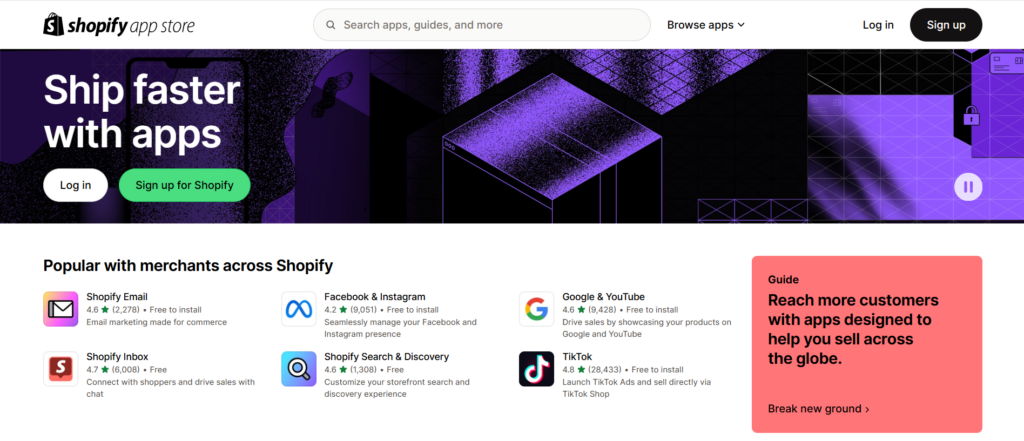
El uso de aplicaciones como herramientas automatizadas de marketing por correo electrónico, integraciones de redes sociales y software de retención de clientes puede mejorar significativamente el rendimiento de su tienda. Realice una investigación exhaustiva para identificar qué aplicaciones se alinean mejor con las necesidades y objetivos de su negocio.
Además, aprovechar las aplicaciones que ofrecen funciones de recuperación de carritos abandonados, ventas adicionales y ventas cruzadas puede aumentar las tasas de conversión. Por ejemplo, el uso de una aplicación que envíe correos electrónicos de seguimiento con códigos de descuento personalizados puede alentar a los compradores indecisos a completar sus compras. De manera similar, las aplicaciones que brindan recomendaciones impulsadas por IA pueden ayudar a mostrar productos relacionados a los clientes, aumentando el valor promedio de los pedidos.
Además, las aplicaciones que mejoran la atención al cliente, como el chat en vivo y las soluciones de chatbot, pueden mejorar la experiencia del usuario y generar confianza en el cliente. Al ofrecer asistencia en tiempo real, puede abordar sus inquietudes rápidamente y evitar posibles pérdidas de ventas.
Evaluar periódicamente el rendimiento de la aplicación y mantenerse al día con los nuevos lanzamientos en la App Store Shopify le garantizará que está utilizando las mejores herramientas para optimizar su tienda. Asegúrese de leer reseñas, probar diferentes aplicaciones y monitorear los análisis para medir su impacto en sus ventas y la participación del cliente.
2. Mantenga una tienda profesional y atractiva
Las primeras impresiones importan. Si bien Shopify proporciona una plataforma fácil de usar con hermosos temas, mantener una tienda profesional y de alta calidad requiere atención a los detalles. Una tienda bien diseñada genera confianza y alienta a los clientes potenciales a realizar una compra.
A continuación se presentan algunos elementos esenciales para mejorar el profesionalismo:
- Utilice un diseño limpio y moderno: Evite el desorden y asegúrese de que su sitio web sea fácil de navegar. Elija un tema profesional que se alinee con la identidad de su marca y haga que la navegación sea fluida.
- Optimice las descripciones e imágenes de los productos: Las imágenes de alta calidad y las descripciones bien escritas tienen un impacto significativo. Utilice múltiples ángulos y funciones de zoom para brindarles a los clientes una visión clara de sus productos. Resalte las características y beneficios clave en sus descripciones para persuadir a los compradores potenciales.
- Garantizar la compatibilidad con dispositivos móviles: Un gran porcentaje de compradores en línea utilizan dispositivos móviles, por lo que un diseño responsivo es crucial. Pruebe su tienda en varios dispositivos para asegurarse de que se adapte bien y brinde una excelente experiencia de usuario.
- Mejorar la velocidad de carga de la página: Un sitio web lento puede alejar a los clientes potenciales. Optimice las imágenes, utilice el almacenamiento en caché y minimice los scripts innecesarios para mejorar los tiempos de carga.
- Crea una estructura de navegación intuitiva: Un menú claro, filtros de categorías y funcionalidad de búsqueda facilitan que los usuarios encuentren rápidamente lo que necesitan, lo que reduce la frustración y aumenta las conversiones.
- Utilice elementos de marca de manera consistente: Los esquemas de colores, fuentes y logotipos cohesivos ayudan a establecer el reconocimiento de marca y una apariencia pulida.
- Proporcionar llamados a la acción (CTA) claros: Botones como “Comprar ahora, ” “Agregar al carrito, ” y “Suscribirse” deben ser destacados y atractivos para fomentar las conversiones.

- Incluir señales de confianza: Mostrar opiniones de clientes, credenciales de pago seguras y políticas de devolución claras tranquiliza a los clientes y genera credibilidad.
Al priorizar la experiencia del usuario y el atractivo visual, puede crear una tienda en línea atractiva y profesional que atraiga y retenga clientes, impulsando en última instancia las ventas y la lealtad a la marca.
3. Traduce tu tienda Shopify para una audiencia global
En el mundo interconectado de hoy, llegar a una audiencia internacional es esencial para hacer crecer su tienda Shopify. Las investigaciones muestran que esto terminó 70% de los usuarios de Internet prefiero navegar por sitios web en su lengua nativa, y casi 50% de los compradores online Es poco probable que compren en un sitio web que no admita su idioma. Al brindar soporte multilingüe, puede: Aumente la participación, reduzca las tasas de rebote y mejore las conversiones de visitantes globales.
Por qué la traducción es importante para el comercio electrónico
- Amplía su alcance de mercado: Al admitir varios idiomas, hace que sus productos sean accesibles a una base de clientes más amplia.
- Mejora las clasificaciones SEO: Traducir su tienda mejora la visibilidad en los motores de búsqueda internacionales, lo que lleva a mayor tráfico orgánico.
- Mejora la confianza del cliente: Los compradores se sienten más cómodos realizando compras en un idioma que entienden.
- Aumenta las ventas y los ingresos: Es más probable que los clientes completen una compra cuando el contenido está disponible en su idioma preferido.
Traduce sin problemas tu tienda Shopify con ConveyThis
Una de las formas más eficientes de agregar soporte multilingüe a su tienda Shopify es mediante el uso ConveyThis, una potente herramienta de traducción diseñada para plataformas de comercio electrónico. ConveyThis proporciona:
- Traducción automática – Traduce rápidamente tu tienda a varios idiomas.
- Compatible con SEO Localización – Asegúrese de que las páginas traducidas estén indexadas correctamente en los motores de búsqueda.
- Traducciones personalizable – Editar y perfeccionar las traducciones para mantener la coherencia de la marca.
- Integración fácil de usar – No se requiere experiencia en codificación; fácil configuración en solo unos pocos pasos.
Pasos para agregar ConveyThis a su tienda Shopify:
Vaya a su panel de administración y haga clic en “Aplicaciones” > “Visita la App Store Shopify”. Busque ConveyThis y, una vez que nos haya encontrado, haga clic en “Instalar”.
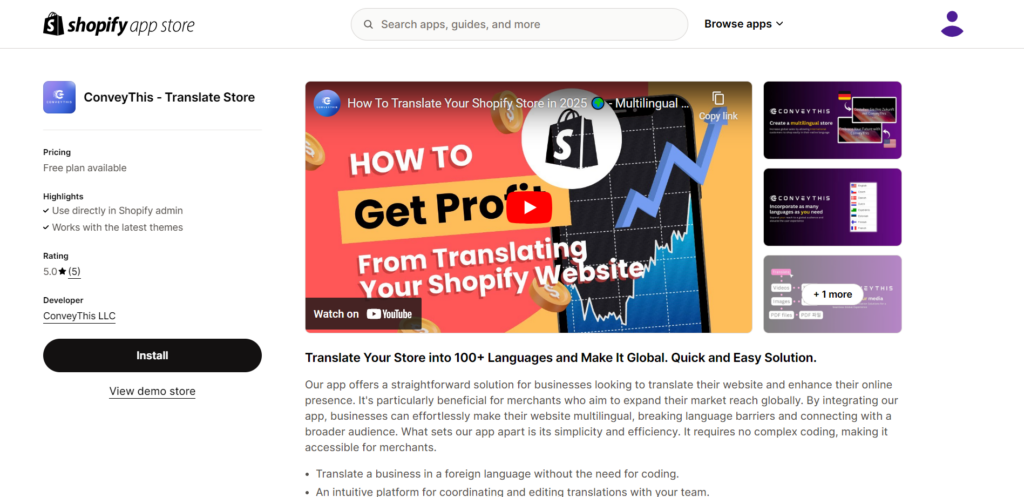
Si ya tiene una cuenta ConveyThis existente, podrá crear directamente un nuevo proyecto o reutilizar un proyecto existente si es necesario.
Si no tiene una cuenta, todo lo que necesita es ingresar una dirección de correo electrónico válida y una contraseña para crear su cuenta en el plan gratuito.
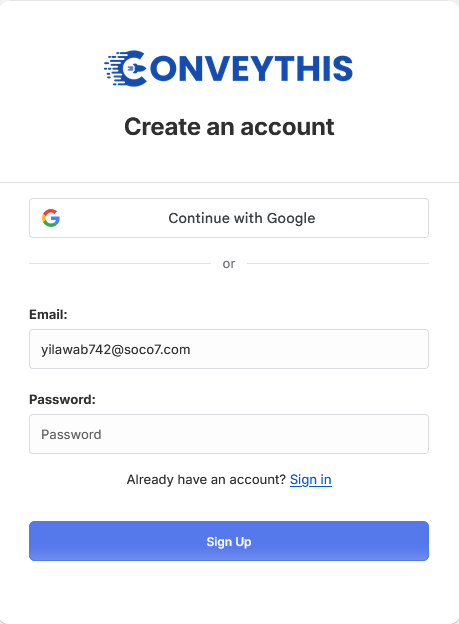
Una vez que haya configurado su cuenta ConveyThis, se le pedirá que elija el idioma en el que está escrita actualmente su tienda y el idioma(s) al que desea traducirla.
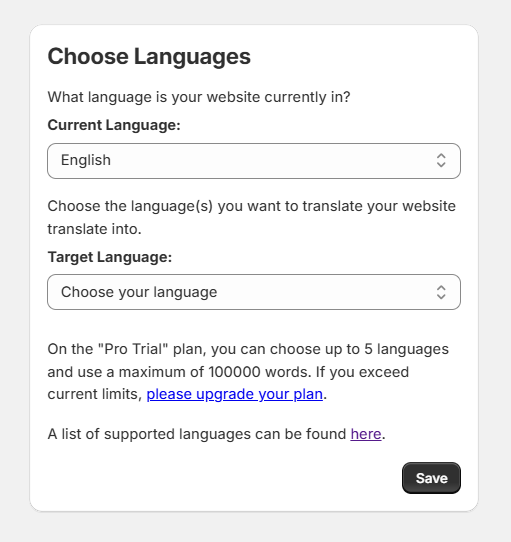
Una vez definidos los idiomas, necesitarás activar ConveyThis en tu tema. Para ello, haga clic en “Activar” botón.
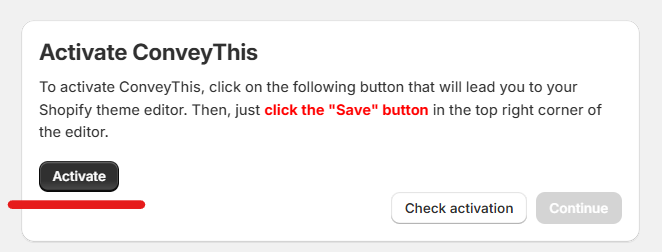
Después de lo cual tendrás que hacer clic en “GuardarBotón ” en la esquina superior derecha del editor.
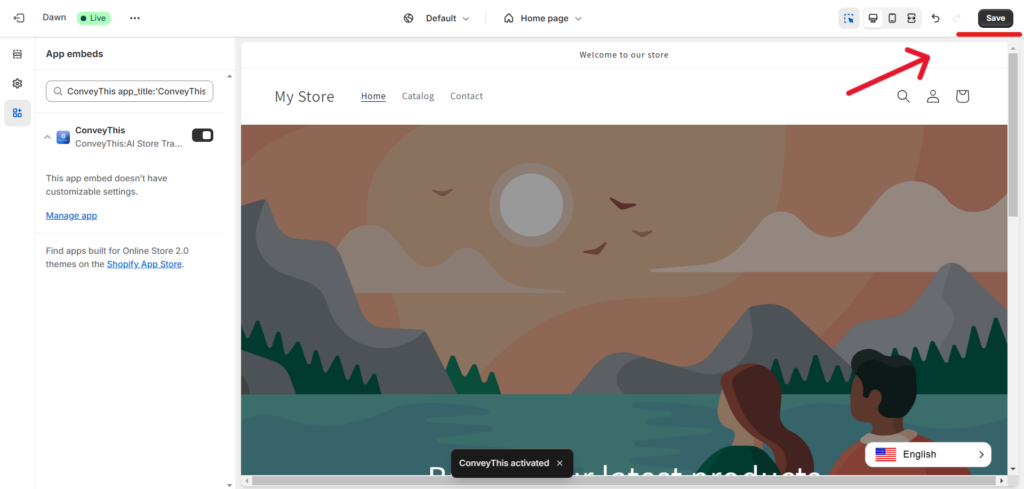
Una vez guardado, puedes regresar a esta página y hacer clic en “Comprobar activación” para finalizar la integración.
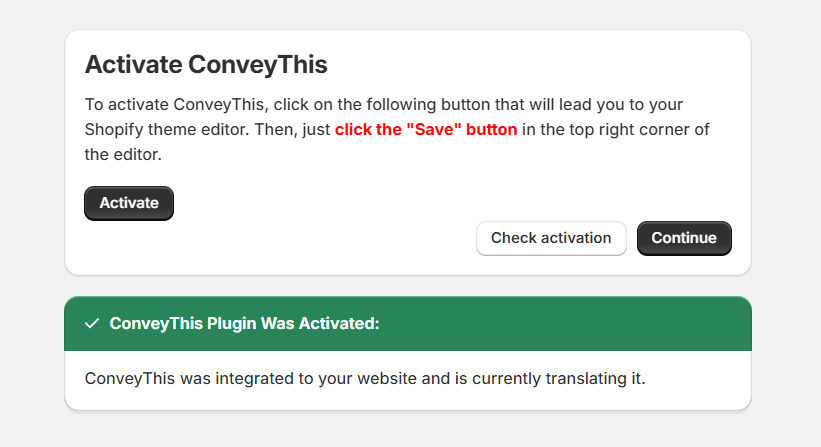
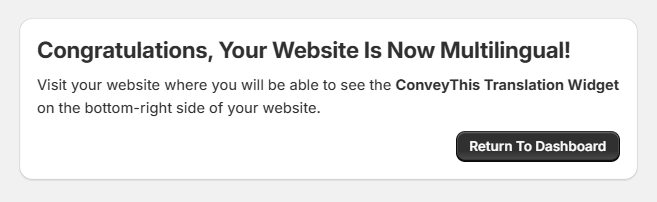
Ahora que tu tienda tiene activado el complemento ConveyThis, puedes comenzar a personalizar tus traducciones y/o la apariencia de tu botón de cambio de idioma haciendo clic en “Regresar al panel de control”.
Instale el complemento ConveyThis copiando y pegando
Si desea elegir una ruta diferente en el proceso de instalación del widget ConveyThis, siempre puede intentarlo Copiar y pegar nuestro fragmento de código.
Primero, tendrás que navegar hasta Shopify Administrador > Tienda en línea > Temas y aquí verás el “…” botón.
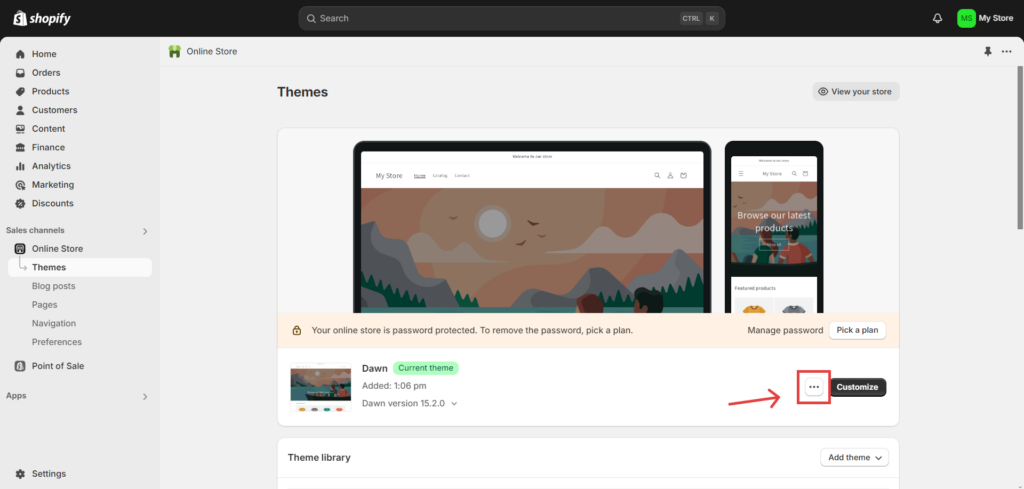
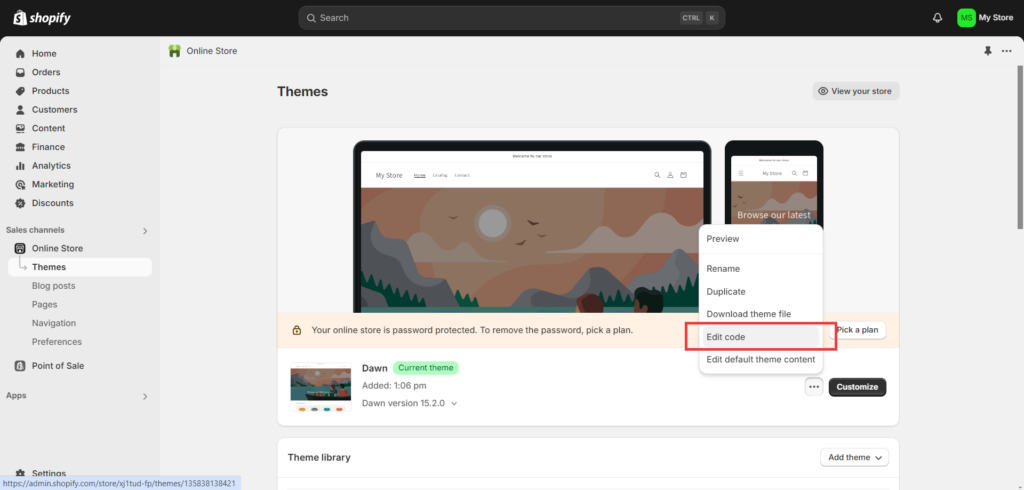
Una vez que presiones el botón “…”, obtendrás una lista de opciones, y entre ellas, elige la “Editar código” opción.
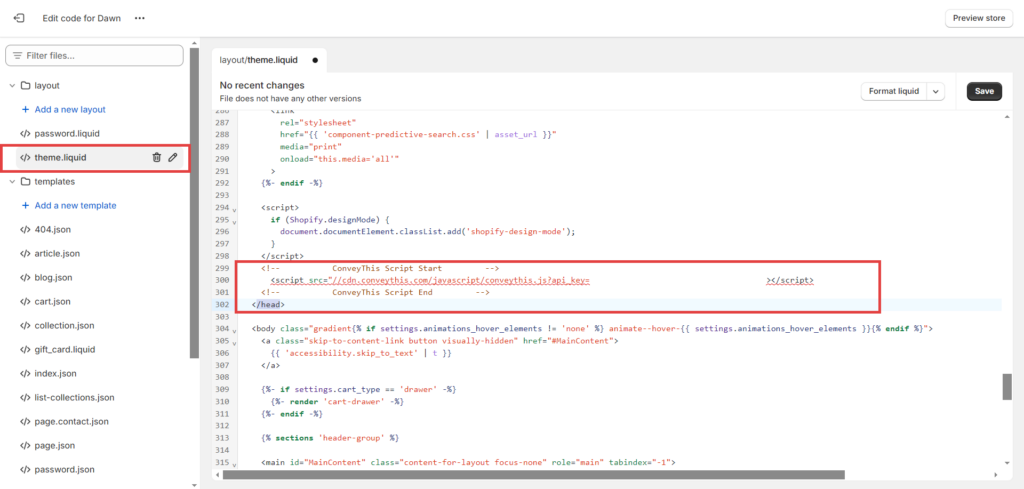
Una vez que navegues a “Editar código“, inserte el fragmento de código proporcionado en el tema.líquido archivo, justo antes del cierre </head> tag.
Eso es todo. Vaya a su sitio web y vea el botón de cambio de idioma en la parte inferior derecha. Puede que tarde unos minutos en aparecer, así que no te preocupes si debes esperar un poco.
Optimización de su tienda multilingüe
- Personalizar traducciones: Revise y perfeccione las traducciones para que coincidan con la voz de su marca.
- Localizar moneda y métodos de pago: Asegúrese de que los precios, las opciones de pago y las pasarelas de pago se alineen con las preferencias de los clientes en diferentes regiones.
- Utilice etiquetas Hreflang: Mejorar el SEO internacional indicando a los motores de búsqueda qué versión de idioma mostrar.
- Analizar el rendimiento: Realice un seguimiento del tráfico internacional, la participación y las tasas de conversión utilizando análisis Shopify.
4. Utilice el marketing de influencia para impulsar las ventas
En el panorama digital actual, marketing de influencia se ha convertido en una de las estrategias más efectivas para impulsar las ventas y aumentar el conocimiento de la marca. Los influencers de las redes sociales han generado confianza con sus audiencias, lo que hace que sus recomendaciones sean muy influyentes en las decisiones de compra. De hecho, 70% de los consumidores compra productos de belleza después de verlos recomendados por personas influyentes en Instagram. El mismo principio se aplica en diversas industrias, incluidas la moda, la tecnología, el fitness y los artículos para el hogar.
Al aprovechar el marketing de influencia, puede: aprovechar las comunidades establecidas, genere participación auténtica e impulse tráfico de alta conversión a su tienda Shopify.
Beneficios del marketing de influencia para las tiendas Shopify
- Aumenta el conocimiento de la marca – Uno de los aspectos más poderosos del marketing de influencia es su capacidad para presentar su marca a una audiencia grande y altamente comprometida. Los influencers a menudo tienen comunidades integradas de seguidores que confían en sus opiniones y buscan activamente nuevos productos y servicios. Cuando los influencers promocionan tu tienda Shopify, actúan como un puente, conectando tu marca con miles o incluso millones de clientes potenciales. Este alcance ampliado puede ser especialmente valioso para empresas nuevas o de nicho que buscan establecer una fuerte presencia en su industria. Además, las colaboraciones con influencers suelen generar revuelo, lo que genera menciones y debates más orgánicos sobre su marca, lo que amplifica aún más su visibilidad.
- Aumenta la credibilidad y la confianza – La confianza es esencial en el competitivo panorama actual del comercio electrónico, y el marketing de influencia proporciona una forma auténtica de generarla. Es más probable que los consumidores confíen en las recomendaciones de las personas influyentes que siguen que en las campañas publicitarias o de marketing tradicionales. Los influencers ya han cultivado relaciones con sus seguidores, quienes valoran sus opiniones y los ven como expertos en sus respectivos campos. Cuando un influencer respalda su tienda o productos Shopify, agrega una capa de credibilidad, lo que hace que los clientes potenciales tengan más probabilidades de confiar en su marca y sentirse seguros al realizar una compra. Este tipo de prueba social es increíblemente valiosa para convencer a los compradores escépticos e impulsar la lealtad a la marca.
- Conduce tráfico objetivo – A diferencia de las tácticas de marketing amplias y generalizadas, las asociaciones con influencers le permiten llegar a audiencias específicas y de nicho que ya están alineadas con su marca. Los influencers tienen seguidores específicos según sus intereses, pasiones y experiencia, lo que significa que sus audiencias suelen ser muy relevantes para los productos o servicios que usted ofrece. Por ejemplo, un influencer de belleza atraerá a una audiencia interesada en cosméticos y cuidado de la piel, mientras que un influencer de fitness tendrá seguidores apasionados por la salud y el bienestar. Al asociarse con personas influyentes que atienden a su nicho, puede generar tráfico calificado y altamente comprometido a su tienda Shopify, lo que resulta en mejores clientes potenciales, tasas de participación más altas e interacciones más significativas con clientes potenciales.
- Mejora las tasas de conversión – El marketing de influencia aprovecha el poder del boca a boca, una de las formas de marketing más efectivas. Los consumidores confían en las recomendaciones de personas que admiran y, cuando esos influencers promocionan sus productos, es más probable que sus seguidores actúen según esas recomendaciones. Esto puede tener un impacto directo en las tasas de conversión, ya que los compradores están más inclinados a realizar compras basadas en el respaldo de una fuente confiable. Además, el contenido de influencers, ya sea una reseña de producto, un tutorial o unboxing, proporciona pruebas sociales valiosas y auténticas que pueden ayudar a persuadir a los compradores potenciales a completar sus compras. El poder del boca a boca, combinado con la naturaleza específica de las campañas de influencia, hace que el marketing de influencia sea un factor clave para mejorar el rendimiento general de ventas de su tienda Shopify.
Pasos para aprovechar eficazmente el marketing de influencia
1. Identifique a los influencers adecuados
Elegir al influencer adecuado es crucial para una campaña exitosa. Esto es lo que hay que tener en cuenta:
- Pertinencia: Encuentre personas influyentes cuyo contenido se alinee con su nicho (por ejemplo, belleza, moda, fitness, decoración del hogar, tecnología).
- Tasa de compromiso: Un alto nivel de participación (me gusta, comentarios, compartidos) es más importante que solo el número de seguidores.
- Demografía del público: Asegúrese de que sus seguidores coincidan con su mercado objetivo en términos de edad, ubicación e intereses.
- Preferencia de plataforma: Instagram, TikTok, YouTube y Pinterest son populares para promociones de productos, pero la plataforma adecuada depende de su industria.
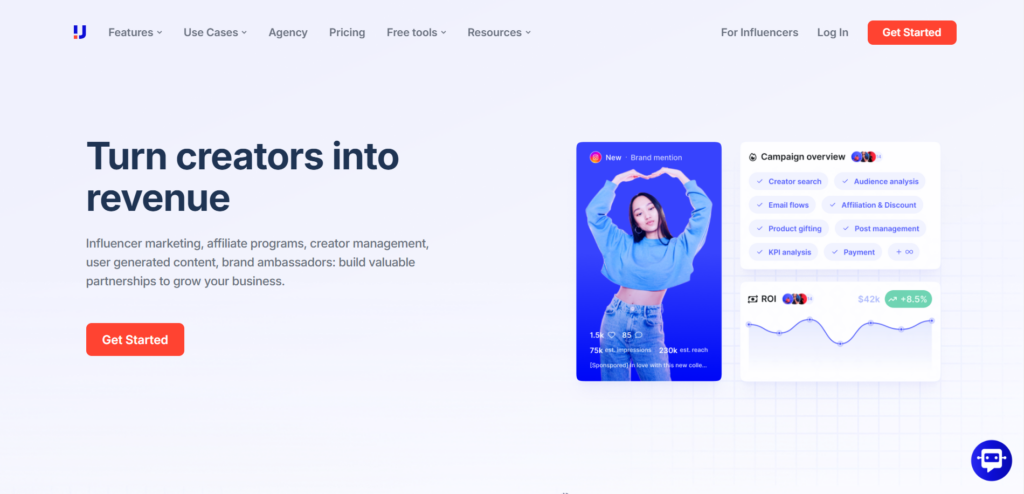
Utilice herramientas como Influencia, AspireIQ o Heepsy para encontrar influencers que se adapten a tu marca.
2. Construya relaciones auténticas
Antes de buscar una colaboración, es importante construir una relación sólida y genuina con personas influyentes potenciales. Este enfoque no solo marca la pauta para una asociación exitosa, sino que también aumenta la probabilidad de que el influencer sea más receptivo y entusiasta a la hora de promocionar su tienda Shopify. A continuación te mostramos cómo puedes interactuar de manera efectiva con posibles personas influyentes antes de iniciar una colaboración:
- Siga sus cuentas e interactúe con sus publicaciones – Una de las formas más simples pero efectivas de comenzar a establecer una buena relación con un influencer es seguir sus cuentas de redes sociales e interactuar activamente con su contenido. Tómese el tiempo para leer sus publicaciones, ver sus historias y familiarizarse con sus intereses, valores y el tipo de contenido que producen. Al darle me gusta y comentar sus publicaciones, muestras un interés genuino en lo que comparten y comienzas a establecer tu presencia en su comunidad. Sin embargo, es esencial asegurarse de que sus interacciones sean auténticas —simplemente darle me gusta a las publicaciones o dejar comentarios genéricos puede parecer superficial. En lugar de eso, interactúa con el contenido de una manera que demuestre que realmente te has conectado con él.
- Deje comentarios reflexivos y comparta su contenido – En lugar de simplemente darle me gusta a las publicaciones, da un paso adicional y deja comentarios reflexivos y significativos. Ofrecer comentarios interesantes o hacer preguntas relevantes demuestra que estás prestando atención al trabajo del influencer y que tienes un interés genuino en lo que hace. Cuando dejas comentarios específicos del contenido —como elogiar su creatividad, ofrecer un cumplido sobre su experiencia o discutir cómo su publicación resuena contigo—, demuestra una conexión más personal. Además, compartir su contenido con tus propios seguidores puede ser un poderoso gesto de buena voluntad. Esto no solo ayuda a promover su trabajo, sino que también demuestra que usted está comprometido con su éxito, lo que puede fomentar la buena voluntad y hacer que sea más probable que respondan positivamente a su futura solicitud de colaboración.
- Envíe un mensaje directo personalizado (DM) mostrando interés genuino en su trabajo – Una vez que haya construido una base de compromiso a través de comentarios y acciones, comunicarse a través de un mensaje directo (DM) personalizado es el siguiente paso para formar una relación genuina. Al enviar un DM, asegúrese de adaptar su mensaje específicamente al influencer. Evite utilizar plantillas genéricas, ya que es mucho más probable que los mensajes personalizados sean bien recibidos. Comience expresando su agradecimiento por su contenido y reconociendo publicaciones o proyectos específicos que admire. Tenga claro por qué cree que una colaboración podría ser mutuamente beneficiosa y demuestre que comprende su marca y su audiencia. Esto demostrará que se ha tomado el tiempo para investigar e interactuar con su trabajo, haciendo que el mensaje parezca más auténtico y respetuoso.
3. Ofrezca ofertas de colaboración atractivas
Diferentes personas influyentes trabajan con las marcas de diferentes maneras, por lo que ofrecen una oferta que se alinea con su presupuesto y sus expectativas:
- Gifting: Envíe productos gratuitos a cambio de una reseña o publicación honesta.
- Asociaciones de afiliados: Proporcionar una comisión por cada venta generada a través de su enlace único o código de descuento.
- Colaboraciones pagadas: Ofrezca una tarifa fija por publicaciones patrocinadas, videos de unboxing o tutoriales de productos.
- Asociaciones a largo plazo: Desarrollar programas de embajadores con personas influyentes para una exposición constante a la marca.
Muchos microinfluencers (5.000–50.000 seguidores) aceptan colaboraciones regaladas, mientras que los influencers más grandes suelen exigir un pago.
4. Permitir la libertad creativa para la autenticidad
Los influencers saben qué resuena mejor con su audiencia, así que darles la flexibilidad crear contenido que se sienta natural. Autenticidad impulsa un mejor compromiso que promociones demasiado guionizadas. Los formatos de contenido populares incluyen:
- Vídeos de unboxing – Mostrando características del producto.
- Tutoriales prácticos – Demostración del uso del producto.
- Testimonios y reseñas – Compartir experiencias personales.
- Detrás de escena (BTS) –Dando una mirada exclusiva a la marca.
Consumidores Responder mejor a la narración en lugar de discursos de venta directa.
5. Seguimiento del rendimiento y optimización de campañas
Realizar un seguimiento del rendimiento de sus campañas de marketing de influencia es crucial para comprender el impacto de sus esfuerzos y garantizar que sus estrategias brinden los resultados deseados. Para medir eficazmente el éxito, es esencial monitorear los indicadores clave de desempeño (KPI) que brindan información sobre las distintas etapas del recorrido del cliente, desde el compromiso inicial hasta la compra final. A continuación se muestra un desglose más detallado de cómo realizar un seguimiento de estos KPI y optimizar sus campañas de influencia para obtener mejores resultados:
- Métricas de participación – Las métricas de participación son uno de los primeros y más importantes indicadores de qué tan bien su colaboración con influencers está resonando en la audiencia. Estas métricas incluyen me gusta, comentarios, publicaciones compartidas e interacciones con historias en las publicaciones del influencer relacionadas con su marca. Los altos niveles de participación indican que el contenido está atrayendo la atención y generando conversaciones, lo cual es crucial para generar conciencia de marca y generar interés.
- Tráfico y clics – Otra métrica importante a rastrear es el tráfico de referencia que proviene directamente del contenido del influencer. Al monitorear cuánto tráfico se dirige a su tienda Shopify a través de publicaciones de influencers, puede medir qué tan efectivos son para generar interés y atraer clientes potenciales.
- Conversiones y ventas – En última instancia, el objetivo de cualquier campaña de marketing de influencia es convertir a los visitantes comprometidos en clientes de pago. Para medir eficazmente las conversiones y las ventas, es fundamental establecer mecanismos de seguimiento que vinculen la actividad de los influencers con las compras reales.

Plataformas como Google Analytics, informes integrados de Shopify’ y enlaces de seguimiento de UTM ayudarle a evaluar el ROI y optimizar futuras campañas de influencers.
Conclusión:
En conclusión, aumentar las ventas en Shopify no se trata sólo de ofrecer excelentes productos, sino también de implementar una estrategia integral que combine tecnología de vanguardia, un enfoque profesional y esfuerzos de marketing específicos. Para lograr un crecimiento sostenido, es esencial aprovechar al máximo las aplicaciones y herramientas Shopify, que pueden ayudar a optimizar todos los aspectos de su tienda, desde la gestión de productos hasta la participación del cliente. Garantizar que su presencia en línea irradie profesionalismo generará confianza con los clientes potenciales, mientras que traducir su tienda a varios idiomas puede abrir puertas a los mercados internacionales, ampliar su alcance y aumentar el potencial de ventas.
Igualmente importante es colaborar con los influencers de las redes sociales adecuados y aprovechar las plataformas que mejor se adapten a su público objetivo. Los influencers pueden aumentar su credibilidad y visibilidad, generando más tráfico y conversiones. Además, centrarse en el SEO, ejecutar campañas de correo electrónico eficaces y utilizar anuncios de retargeting puede ayudarle a mantenerse visible y mantener a los clientes interesados. Mantenerse adaptable y analizar continuamente el rendimiento de su tienda es crucial para comprender qué funciona y qué no. Al optimizar constantemente sus estrategias, realizar un seguimiento de métricas clave y adoptar nuevas tendencias, puede mantenerse por delante de la competencia.
En última instancia, el éxito en Shopify es una combinación de persistencia, creatividad y utilización de las herramientas adecuadas en el momento adecuado. Al adoptar un enfoque multifacético que incluye tecnología, marketing y personalización, su tienda Shopify puede superar a la competencia y prosperar en el panorama del comercio electrónico en constante evolución. Continúe perfeccionando sus métodos, experimentando con nuevas ideas y manteniéndose conectado con su audiencia, y encontrará que los ingresos y la base de clientes de su tienda crecen constantemente con el tiempo.
Recursos adicionales:
- ConveyThis Integraciones – Para explorar la compatibilidad con Shopify.
- Cómo traducir la página de pago Shopify – Para más orientación.
- Guía de ayuda para la traducción de sus notificaciones por correo electrónico Shopify – Para soporte paso a paso.
Relacionado: Traducir un sitio web al inglés en Safari: consejos rápidos, Traducir un sitio web al inglés en Firefox: soluciones sencillas












;fill-opacity:1;'%20d='M%2019.511719%2039.964844%20C%208.304688%2039.964844%200%2031.289062%200%2020.324219%20L%200%2020.230469%20C%200%209.363281%208.160156%200.46875%2019.847656%200.46875%20C%2027.023438%200.46875%2031.320312%202.878906%2034.847656%206.375%20L%2029.519531%2012.492188%20C%2026.59375%209.820312%2023.59375%208.179688%2019.800781%208.179688%20C%2013.390625%208.179688%208.761719%2013.53125%208.761719%2020.085938%20L%208.761719%2020.203125%20C%208.761719%2026.757812%2013.273438%2032.203125%2019.800781%2032.203125%20C%2024.144531%2032.203125%2026.808594%2030.46875%2029.808594%2027.722656%20L%2035.136719%2033.121094%20C%2031.199219%2037.335938%2026.855469%2039.964844%2019.511719%2039.964844%20'/%3e%3cpath%20style='%20stroke:none;fill-rule:nonzero;fill:rgb(26.274511%25,42.352942%25,94.901961%25);fill-opacity:1;'%20d='M%2035.878906%200.0351562%20L%2044.136719%200.0351562%20L%2044.136719%2039.867188%20L%2035.878906%2039.867188%20Z%20M%2035.878906%200.0351562%20'/%3e%3cpath%20style='%20stroke:none;fill-rule:nonzero;fill:rgb(26.274511%25,42.352942%25,94.901961%25);fill-opacity:1;'%20d='M%2059.472656%2016.15625%20C%2056.039062%2016.15625%2053.808594%2018.613281%2053.160156%2022.375%20L%2065.617188%2022.375%20C%2065.113281%2018.664062%2062.953125%2016.15625%2059.472656%2016.15625%20M%2073.535156%2027.578125%20L%2053.28125%2027.578125%20C%2054.097656%2031.335938%2056.710938%2033.3125%2060.40625%2033.3125%20C%2063.191406%2033.3125%2065.183594%2032.445312%2067.464844%2030.300781%20L%2072.191406%2034.492188%20C%2069.480469%2037.867188%2065.566406%2039.941406%2060.289062%2039.941406%20C%2051.527344%2039.941406%2045.070312%2033.769531%2045.070312%2024.832031%20L%2045.070312%2024.710938%20C%2045.070312%2016.347656%2051%209.480469%2059.472656%209.480469%20C%2069.191406%209.480469%2073.65625%2017.074219%2073.65625%2025.363281%20L%2073.65625%2025.457031%20C%2073.65625%2026.300781%2073.609375%2026.808594%2073.535156%2027.578125%20'/%3e%3cpath%20style='%20stroke:none;fill-rule:nonzero;fill:rgb(26.274511%25,42.352942%25,94.901961%25);fill-opacity:1;'%20d='M%2089.375%2039.796875%20L%2081.863281%2039.796875%20L%2070.390625%2010.324219%20L%2079.152344%2010.324219%20L%2085.679688%2029.914062%20L%2092.257812%2010.324219%20L%20100.847656%2010.324219%20Z%20M%2089.375%2039.796875%20'/%3e%3cpath%20style='%20stroke:none;fill-rule:nonzero;fill:rgb(26.274511%25,42.352942%25,94.901961%25);fill-opacity:1;'%20d='M%20111.550781%2016.15625%20C%20108.121094%2016.15625%20105.886719%2018.613281%20105.238281%2022.375%20L%20117.695312%2022.375%20C%20117.191406%2018.664062%20115.03125%2016.15625%20111.550781%2016.15625%20M%20125.617188%2027.578125%20L%20105.359375%2027.578125%20C%20106.175781%2031.335938%20108.792969%2033.3125%20112.488281%2033.3125%20C%20115.246094%2033.3125%20117.265625%2032.445312%20119.542969%2030.300781%20L%20124.273438%2034.492188%20C%20121.558594%2037.867188%20117.648438%2039.941406%20112.367188%2039.941406%20C%20103.609375%2039.941406%2097.152344%2033.769531%2097.152344%2024.832031%20L%2097.152344%2024.710938%20C%2097.152344%2016.347656%20103.078125%209.480469%20111.550781%209.480469%20C%20121.273438%209.480469%20125.734375%2017.074219%20125.734375%2025.363281%20L%20125.734375%2025.457031%20C%20125.734375%2026.300781%20125.6875%2026.808594%20125.617188%2027.578125%20'/%3e%3cpath%20style='%20stroke:none;fill-rule:nonzero;fill:rgb(26.274511%25,42.352942%25,94.901961%25);fill-opacity:1;'%20d='M%20143.566406%2018.757812%20C%20138.070312%2018.757812%20134.710938%2022.085938%20134.710938%2029.074219%20L%20134.710938%2039.867188%20L%20126.457031%2039.867188%20L%20126.457031%2010.613281%20L%20134.710938%2010.613281%20L%20134.710938%2016.519531%20C%20136.390625%2012.46875%20139.128906%209.867188%20144%2010.085938%20L%20144%2018.757812%20Z%20M%20143.566406%2018.757812%20'/%3e%3c/g%3e%3c/svg%3e)




;fill-opacity:1;'%20d='M%20144.558594%2039.894531%20L%20155.4375%209.839844%20C%20155.4375%209.839844%20147.28125%209.839844%20139.121094%2011.515625%20L%20128.867188%2039.894531%20Z%20M%20142.675781%201.78125%20L%20140.585938%207.539062%20C%20148.738281%205.863281%20156.902344%205.863281%20156.902344%205.863281%20L%20158.992188%200.105469%20C%20158.992188%200.105469%20150.832031%200.105469%20142.675781%201.78125%20M%2085.980469%2032.773438%20C%2090.898438%2033.71875%2095.914062%2034.136719%20101.039062%2034.136719%20C%20106.375%2034.136719%20110.140625%2032.984375%20110.554688%2029.320312%20C%20110.765625%2027.640625%20109.089844%2026.382812%20106.167969%2024.707031%20C%20102.816406%2022.824219%2099.894531%2021.878906%2096.960938%2019.886719%20C%2094.03125%2017.898438%2092.78125%2014.859375%2093.71875%2011.507812%20C%2094.871094%207.636719%2097.585938%205.4375%20101.664062%203.34375%20C%20106.480469%200.9375%20110.242188%20-0.0078125%20119.550781%20-0.0078125%20C%20125.40625%20-0.0078125%20131.054688%200.515625%20136.597656%201.667969%20L%20134.609375%207.113281%20C%20129.691406%206.167969%20124.675781%205.75%20119.550781%205.75%20C%20114.214844%205.75%20110.453125%206.90625%20110.035156%2010.570312%20C%20109.828125%2012.246094%20111.5%2013.503906%20114.425781%2015.179688%20C%20117.773438%2017.066406%20120.695312%2018.011719%20123.628906%2020%20C%20126.558594%2021.988281%20127.808594%2025.027344%20126.871094%2028.378906%20C%20125.71875%2032.253906%20123.003906%2034.449219%20118.925781%2036.542969%20C%20114.113281%2038.949219%20110.347656%2039.894531%20101.039062%2039.894531%20C%2095.183594%2039.894531%2089.535156%2039.375%2083.992188%2038.21875%20Z%20M%2062.34375%2039.894531%20L%2071.441406%2014.867188%20C%2074.476562%206.488281%2063.390625%209.527344%2060.875%2011.515625%20C%2058.890625%2012.984375%2055.332031%2016.441406%2054.078125%2020.105469%20L%2046.859375%2040%20L%2031.175781%2040%20L%2040.273438%2014.867188%20C%2043.308594%206.488281%2032.222656%209.527344%2029.710938%2011.515625%20C%2027.722656%2012.984375%2024.167969%2016.441406%2022.910156%2020.105469%20L%2015.691406%2040%20L%200.0078125%2040%20L%2014.441406%200.105469%20C%2019.464844%200.105469%2022.179688%201.257812%2024.375%203.457031%20C%2025.207031%204.289062%2025.734375%205.339844%2026.046875%206.496094%20C%2028.980469%204.714844%2031.589844%203.351562%2033.371094%202.726562%20C%2036.613281%201.46875%2040.691406%200.105469%2045.714844%200.105469%20C%2050.734375%200.105469%2053.453125%201.257812%2055.644531%203.457031%20C%2056.480469%204.289062%2057.007812%205.339844%2057.320312%206.496094%20C%2060.25%204.714844%2062.863281%203.351562%2064.640625%202.726562%20C%2067.886719%201.46875%2071.964844%200.113281%2076.984375%200.113281%20C%2082.007812%200.113281%2084.722656%201.265625%2086.917969%203.464844%20C%2089.21875%205.660156%2089.113281%209.742188%2088.28125%2012.050781%20L%2078.027344%2039.902344%20L%2062.34375%2039.902344%20Z%20M%2062.34375%2039.894531%20'/%3e%3c/g%3e%3c/svg%3e)

;fill-opacity:1;'%20d='M%202.453125%209.882812%20L%202.453125%2012.851562%20L%207.304688%2012.851562%20L%2016.800781%2030.734375%20L%2028.488281%2030.734375%20L%2037.980469%2012.824219%20L%2042.832031%2012.792969%20L%2042.84375%209.882812%20L%2028.328125%209.882812%20L%2028.328125%2012.804688%20L%2032.195312%2012.804688%20L%2025.488281%2025.515625%20L%2018.234375%2012.847656%20L%2023.527344%2012.824219%20L%2023.515625%209.882812%20Z%20M%2096.097656%209.882812%20L%2096.097656%2012.851562%20L%20100.949219%2012.851562%20L%20110.445312%2030.734375%20L%20122.128906%2030.734375%20L%20131.625%2012.824219%20L%20136.476562%2012.792969%20L%20136.484375%209.882812%20L%20121.972656%209.882812%20L%20121.972656%2012.804688%20L%20125.835938%2012.804688%20L%20119.132812%2025.515625%20L%20111.878906%2012.847656%20L%20117.167969%2012.824219%20L%20117.160156%209.882812%20Z%20M%2072.222656%209.882812%20L%2072.222656%2012.851562%20L%2077.078125%2012.851562%20L%2077.082031%2027.453125%20L%2071.96875%2027.453125%20L%2071.96875%2030.707031%20L%2077.085938%2030.734375%20L%20101.3125%2030.734375%20L%20101.3125%2021.027344%20L%2098.15625%2021.027344%20C%2097.984375%2026.167969%2093.542969%2027.457031%2091.675781%2027.457031%20C%2089.960938%2027.457031%2086.640625%2027.453125%2086.640625%2027.453125%20L%2086.640625%2012.847656%20L%2091.417969%2012.824219%20L%2091.410156%209.882812%20Z%20M%2055.890625%209.285156%20C%2047.644531%209.285156%2040.960938%2014.214844%2040.960938%2020.292969%20C%2040.960938%2026.375%2047.644531%2031.304688%2055.890625%2031.304688%20C%2064.136719%2031.304688%2070.824219%2026.375%2070.824219%2020.292969%20C%2070.824219%2014.214844%2064.136719%209.285156%2055.890625%209.285156%20Z%20M%2055.675781%2028.0625%20C%2052.769531%2028.0625%2050.414062%2024.566406%2050.414062%2020.25%20C%2050.414062%2015.933594%2052.769531%2012.4375%2055.675781%2012.4375%20C%2058.582031%2012.4375%2060.941406%2015.933594%2060.941406%2020.25%20C%2060.941406%2024.566406%2058.582031%2028.0625%2055.675781%2028.0625%20Z%20M%20149.539062%208.921875%20C%20141.289062%208.921875%20134.605469%2013.933594%20134.605469%2020.113281%20C%20134.605469%2026.292969%20141.289062%2031.300781%20149.539062%2031.300781%20C%20157.78125%2031.300781%20164.46875%2026.292969%20164.46875%2020.113281%20C%20164.46875%2013.933594%20157.78125%208.921875%20149.539062%208.921875%20Z%20M%20149.324219%2028.007812%20C%20146.417969%2028.007812%20144.0625%2024.453125%20144.0625%2020.066406%20C%20144.0625%2015.679688%20146.417969%2012.125%20149.324219%2012.125%20C%20152.230469%2012.125%20154.585938%2015.679688%20154.585938%2020.066406%20C%20154.585938%2024.453125%20152.230469%2028.007812%20149.324219%2028.007812%20Z%20M%20149.324219%2028.007812%20'/%3e%3c/g%3e%3c/svg%3e)